Showing posts with label eco fashion. Show all posts

Friday, April 24, 2015

The Human Cost of Cheap Clothing

We want to know where their food comes from—why wouldn’t we also think about where our clothing comes from?


Two years have passed since the Rana Plaza collapse, one of the most tragic industrial disasters in recent history. Over 1,100 died and 2,500 more were injured—the worst part is that not much has changed for the surviving garment factory workers directly affected by the Rana Plaza or the industry as a whole.

Believe it or not, fashion industry’s supply chain is even harder to navigate than the agricultural sector. The process for clothing manufacturing doesn’t start at factories like Rana Plaza—before garment workers can sew the fabric, the fabric needs to be made and designed. For the fabric to be made, the fibers need to be treated. For the fibers to be treated in the first place, the raw material needs to be picked…

With each step of the process, there are questions that need to be asked—Is the process for picking the raw material ethical and environmentally-friendly? Are farm hands picking cotton of legal working age and earning a decent wage? What dyes are being used for the fabric? Are they toxic? How are the working conditions of the garment factories?

Then what happens when the clothes leave the factory is an entirely different story altogether. Distribution. Marketing and advertising. Selling. The parts of the industry that the average person is the most familiar with.


Unfortunately, the real behind-the-scenes of the fashion industry—the not-so glamorous factories, the impoverished workers—continue to be overlooked. The stories of those who lost their loved ones and their livelihoods as a result of the Rana Plaza continue to be overlooked.

One Norwegian reality television show, Sweatshop: Deadly Fashion, sent three fashion bloggers to work at a garment factory in Cambodia. In the trailer, one of the young women cries and asks the camera, “What kind of life is this?”

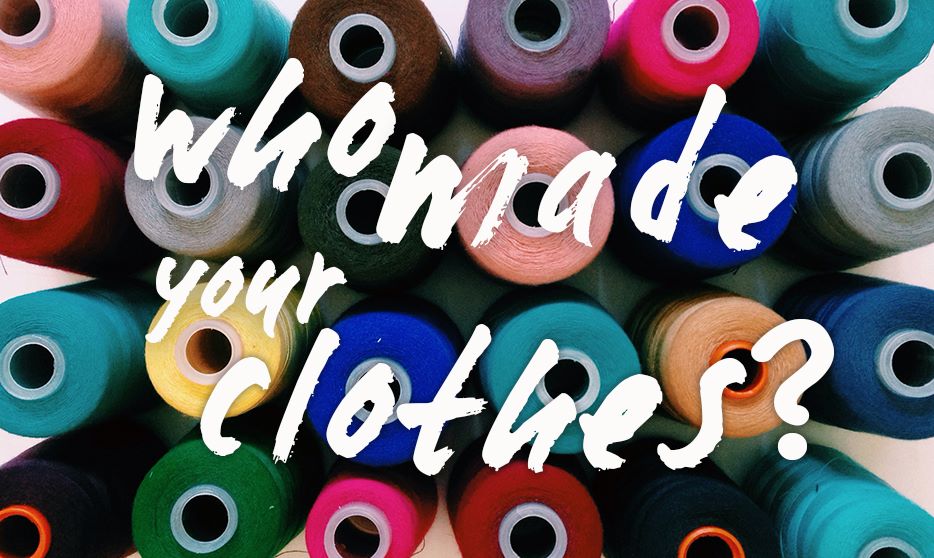
There are movements in place to raise more awareness of these controversial issues surrounding the fashion industry among consumers, the strongest being Fashion Revolution Day held on April 24, which commemorates the anniversary of the Rana Plaza collapse. Fashion Revolution Day invites people to ask themselves the big question—who made your clothes?

Fashion Revolution Day: A Day to Ask #WhoMadeMyClothes? | The Huffington Post

Rana Plaza: rallies in Bangladesh as victims await compensation | The Guardian

DNA of 135 Rana Plaza Victims Still Not Found | BBC News

‘Human Cost of Cheap Clothes’: Retail giants fail to pay Rana Plaza victims compensation | RT

This post was originally posted with the Pell Center for International Relations and Public Policy at Salve Regina. To learn more about the Pell Center, please visit www.pellcenter.org.

Monday, October 28, 2013

Pure Happiness

If you are interested in finding eco-friendly clothing, you need to learn about Pure Happiness.

"Detoxify Your Life, Live in Pure Happiness"


Conventionally-grown cotton has had devastating effects on the environment and on communities in developing countries. Pure Happiness focuses on building a sustainable lifestyle for the consumer and for the community by using bamboo, hemp, and organic cotton to produce their clothing. 
"Pure Happiness recognizes nature to be the greatest designer and strives to provide ecologically sound clothing which benefits those working hardest to uplift humanity through sustainable fibers and manufacturing processes, with the goal of providing pure fabrics and a more sustainable future. Your PH purchase is rooted in the seed of a better tomorrow, closer to the natural order of life, driven by the fruits of hard working individuals seeking “to be the change” while looking and feeling good."
Pure Happiness is currently in the process of planning out a Kickstarter fundraiser, but you're encouraged to stay updated via email, Facebook and Twitter!


(P.S. I am happy to announce that I am a social media manager for Pure Happiness!)

Monday, January 7, 2013

Searching for Sustainable Style: An Examination of the Rising Demand for Fairer Fashion

This is the article I have been working on about whether or not Fair Trade fashion is a trend among the fashion world. It's not what I expected to find, but hope exists that fairer fashion is possible.


Searching for Sustainable Style
An examination of the rising demand for fairer fashion

Rachel Lessne, owner of Green Envy Eco-Boutique, always gravitated towards buying natural products, but it was not until her college professor at the University of Rhode Island mentioned organic cotton in her textiles science course. Lessne said that learning about organic cotton “just sparked something.” She started doing further research which also “lead to recycling, Fair Trade, natural skincare, and everything natural.”

Lessne became increasingly curious about sustainable fashion and, as a result, she opened Green Envy Eco-Boutique in 2007, a store which sells local, organic, and Fair Trade beauty and apparel.

Buying Fair Trade products contributes to the ethical treatment of farmers and laborers, who are subjected to poor working conditions and meager wages, by providing workers with better opportunities for their communities and their families.

Fortunately, buying Fair Trade products has been a growing consumer trend. The Fairtrade Labelling Organizations (FLO) claims Fair Trade markets experienced a larger rate of growth since 2009, reached a $1.2 billion in product sales, and 1.2 million farmers worldwide have been affected by Fair Trade.

Sustainable fashion, which is defined by integrating environmentally conscious practices in the industry’s supply chain, has become popularized in “fast fashion” retail chains, like H&M or Zara. The use of energy efficient technologies and organic fibers are only some of the components of sustainable fashion.


Fair labor practices were introduced to the fashion industry in the early 1990s when major corporate brands, Nike and Gap, were accused of abusing workers and, since then, corporate fashion giants have made an effort to adopt guidelines and codes of conduct to improve working conditions. However, Fair Trade clothing still struggles to make an appearance eco-chic catwalk compared to organic cotton or recycled textiles.

Fashion brands become Fair Trade certified by either earning a certification from the Fair Trade Federation or engaging in direct trade with manufacturers. Fair Trade certified businesses are dedicated to not only producing Fair Trade goods, but also supporting artisans and co-ops with just codes. 

“In other words,” Executive Director Renee Bowers of the Fair Trade Federation explained in an email, “[Fair Trade certified companies] do not just sell one or two fair trade products, they practice fair trade in everything they do.” In regards to the general Fair Trade market, Bowers believes “consumers are increasingly aware of the impact that their purchases have.” “We live in a global community,” explains Bowers. “It is exciting to see shoppers who feel a sense of responsibility for the world around them.”


However, as the Fair Trade movement crosses over to many industries—coffee and tea production, furniture, skincare—it struggles to break into the fashion world. “Slow + Fashion…An Oxymoron—or a Promise for the Future…?”, written by Hazel Clark of Parsons the New School for Design, argues that clothes have much shorter lifespan than ever before. Clark attributes low production costs—inexpensive fabrics, low pay, and worker exploitation—as by-products of trend-driven “fast fashion.”

Fair Trade first began in the coffee industry during the 1980s. According to Fair Trade from the Ground Up by April Linton, nearly half of the world’s coffee beans are grown by small, independent farmers, a fact which highlights coffee as an important international good for developing countries, including Nicaragua and Ethiopia. 

In 1986, three friends founded Equal Exchange, a key organization in the United States that opened a door for ethically produced foods in the market. Equal Exchange’s first product, CafĂ© Nica, benefitted Nicaraguan cooperatives, or “co-cops,” organized communities that work together in a particular trade.

Todd Larsen, Corporate Social Responsibility Director at Green America and associate of the National Association of Sustainable Fashion Designers, helps organize green festivals, eco-fashion shows, and nationwide tours to educate the public about green living, including the effects of buying Fair Trade. Larsen says “as Fair Trade becomes a growing sector in the marketplace, more and more people will understand that where you spend your money matters and has a real impact on people.”

A 2008 study conducted by two economists, Arnab Basu and Robert Hicks, analyzed whether or not college students would be willing to pay more for Fair Trade labeled products after they were educated about the beliefs and principles of Fair Trade. 

The research concluded that the college student test subjects were willing to pay the higher priced Fair Trade product with the Fair Trade label certified by the U.S. Department of Agriculture.


Paying laborers a living wage, a sustainable income that can adequately provide food, education, and opportunity for workers’ families, is a central component to Fair Trade. It is important to understand that a living wage does not aim to elevate workers to wealth, but to help them with obtaining necessities and empowering workers with the integrity. 

“Can you feel good about buying a product where you know that the person who made the product received only fifty cents of the one hundred dollars you paid to the retailer?” asks Larsen. “Or, would you like to live in a world where you bought a product and you know that the person who bought the product from and put together that product for you received a living wage?”

Still, Larsen admits integrating Fair Trade practices has obstacles in the fashion industry. The appearance and the price of Fair Trade garments are consumer factors that need to be reconsidered. 

“The typical way people buy clothing is that they go to a store and pick an item that they like, that’s attractive to them, that they’d like to wear, and then they look for price,” says Larsen. Until recently, Fair Trade clothes have been designed to represent the foreign country from which it came. Some consumers accept it, but most Westerners prefer to dress in Western style clothing.

In comparison to Fair Trade foods, one of the challenges Larsen sees Fair Trade fashion face is that “it’s harder to break the conventional marketplace with them” because of the more complex distribution network of garment production in comparison to growing cocoa or coffee beans. 

In the agricultural sector, it is a matter of focusing on the laborers and products in one central farming area. Producing garments is a much more complicated process, because it involves cotton farms and factories spread out in different parts of the world. As a result, monitoring the each step of the clothing supply chain requires more regulation.


Shannon Lorraine, founder of public relations firm Foundfuture, works with fashion designers whom may not be Fair Trade certified through the Fair Trade Federation, but most of the designers have direct relationships with their factories. Lorraine says that the designers have all of the facts about who they’re working with and what the working conditions are. 

Recently, Lorraine was alarmed when one of her clients produced a percentage of products in China. In the sustainable fashion industry, especially in regards to Fair Trade, Lorraine says that the mention of China is like using a “dirty word,” because it has a reputation for maltreatment of workers.

Two of Foundfuture's clients, Flotsam & Jetsam and Alberto Juan, were recently featured in W Magazine's December 2012 issue.

However, Lorraine noted that there was one UK clothing brand, Dialogue, who defied the stereotype of China’s factory reputation. Dialogue worked with different cooperatives in China and Vietnam where there were centers for drug abuse or battered women. The brand would teach these organizations how to do an origami trim on their purses and in effect, employ them and help the people learn a new set of skills.


Problems with conventional factory production are not restricted to Southeast Asia—it is also a problem in the United States. Lorraine had once worked in a particular area of the Garment District in New York City, between 34th street and 9th street, where she witnessed sights very atypical of the expectation of city life in America: her office at the time shared a floor with a clothing factory. 

“The door opened once every few hours and you would see people head down, sewing,” says Lorraine. When workers wanted to use the bathroom, the door would be unbarred to let them leave and re-enter. “It was a really creepy thing to see,” Lorraine said. Initiatives in the Garment District in New York, as well as in Los Angeles, C.A., need to monitor and protect domestic factory workers in the United States.

Lorraine believes there is a growing awareness of fair labor practices, but does not think it is either a trend or it is not something consumers look for when buying clothing. Her firm does “focus on sustainable designers, but it’s based on design first—it has to be a good product” to attract press attention from magazine publications and to look good on the consumer so he/she will buy the product.

Another problem Lorraine sees is Fair Trade’s loaded marketing angle. “I don’t feel like it’s trendy and sexy the way ‘eco’ is trendy and sexy” because of Fair Trade’s politically charged background. Lorraine recalls when Fair Trade first became popular, but described it as “complicated” and “preachy” and that “it really turned people off. As a result, Fair Trade can be harder to appeal to consumers.


“Is Green the New Black?: Exploring Ethical Fashion Consumption,” an article published in 2011 by Chris Gibson and Elyse Stanes, theorizes that the fashion consumers who shop more often out of impulse or addiction, known as “shopaholics,” are more likely to buy sustainable and Fair Trade clothing because of their heightened awareness of consumption. 

Hannah Cazzetta, a college student at Salve Regina University and self-professed “shopaholic” buys clothes from J. Crew, Nordstrom, and Urban Outfitters, but also shops at Lessne’s eco-boutique, Green Envy, and secondhand clothing stores. “I think [Fair Trade] could make a difference, it’s hard to say,” claims Cazzetta. “I like the idea behind it.”

Even though Fair Trade has yet to become more popular with fashion consumers, it also took the Fair Trade movement nearly a decade to catch on. Larsen says consumers “didn’t know where to buy [Fair Trade products], who sold them, or what it meant for workers” when he started working at Green America ten years ago. Now, Larsen observes that the Fair Trade market is currently experiencing exponential growth and rising demand.

Despite her initial misgivings, Lorraine thinks that Fair Trade and equitable treatment in the labor force is becoming more expected in the context of corporate business interiors. “It seemed like it was a trend five years ago, but now it’s starting to become more common practice and that’s the goal, really.”

Tuesday, November 27, 2012

Newport/Narragansett: More Holiday Shopping and Fair Trade Tuesday

Before my usual Starbucks run and work, I went to Wish Newport just to browse, but of course, my detour ended with a small purchase. Wish Newport, which sells designer women's consignment, also sells young children's designer consignment for babies and toddlers. My cousin is expecting her second son in mid January, so I picked up two Ralph Lauren onesies for only $12.00. Now that's a bargain.


After that successful steal, I want to go back and buy some more things for my cousin's eldest son, who is currently 15 months old. 

On Facebook, Newport Mercury posted that they needed someone to do a bow-making demonstration for an elaborate big bow. To be completely honest, I think it would be more useful if they covered an article about how to wrap gifts, because there are some atrocious gift wrappers out there who can barely tape the wrapping paper together, let alone make a bow. I sent the paper an email that I would be glad to help. Regardless of whether or not they respond, I think it would be a good idea to do How-Tos on gift wrapping.


The Fair Trade fashion assignment is going well so far. I have one more interview tomorrow, but after that, I just need to do some research and write the draft for early December. 

In fact, one of my interviewees, Ms. Renee Bowers of the Fair Trade Federation, says that tomorrow is Fair Trade Tuesday! In response to the other shopping holidays after Thanksgiving, I think it is a great way to encourage the public to buy Fair Trade for holiday gifts. 

Fair Trade Tuesday, created by Global Goods Partners, supports by Fair Trade organizations across the nation:

Fair Tuesday (hashtag #FairTuesday) is an initiative created in response to Black Friday and Cyber Monday. The goal of #FairTuesday is to inspire conscious consumerism and show how an everyday purchase can change lives in a whole community. We are featuring fair trade, ethical, and eco-friendly brands and inviting other businesses to take a step towards sustainability.

In the future, I hope Small Business Saturday and Fair Trade Tuesday gain a higher following around the holidays and year-round.


Monday's Outfit

Wednesday, November 21, 2012

Shopping Green/Local/Fair Trade for Christmas 2012

Last year, I wrote a Christmas wish list that had nothing to do with local, Fair Trade, or green shopping whatsoever. This year, I hope to shop only local and/or green for the holidays and beyond.

To be honest, I have been refraining from shopping at clothing chain stores. I have browsed through so many stores during the semester, but I cannot bring myself to buy them because I don't know if I can trust their ethical practices in their clothing production. The only place where I have bought clothing in recent months is Wish Newport, the designer consignment boutique downtown.

With Black Friday and Small Business Saturday a few days away, here is my shopping plan for the weekend:

Crosswynds TradersNarragansett, RI (local)- I haven't been in here for a while, but I will definitely want to look at their selection of Lucky Brand, Juicy Couture, and Urban Outfitters.

Green Envy Boutique, Newport, RI (local/green/Fair Trade)- This is where I plan on getting "smalls"--jewelry, tea, etc--for friends' gifts. Also, guilt-free shopping because it's an entirely sustainable boutique.


Wish Newport, Newport RI - Obviously.


Laura Jean Denim Shop, Newport, RI (local) - When I went in last week, there were beautiful cashmere sweaters, the cutest Frye boots, and the oh-so-perfect pairs of J Brand jeans. I plan on spending paycheck here on a cashmere sweater or a couple pairs of leggings. It will be so worth it.

Island Books, Newport, RI (local)- Picking out some new reads for my relatives and little cousins would be great. Probably my favorite bookstore.


Jack Wills, Newport, RI (green-ish)- I know they are technically a chain store, but they are a foundation member of the Ethical Trade Initiative, which makes me feel better shopping there... Also planning on spending a full paycheck here as well...

Source: jackwills.com via Mia on Pinterest

Renee Bowers of the Fair Trade Federation, whom I interviewed for my journalism assignment on Fair Trade, referred me to a holiday gift guide assembled by the Fair Trade Federation, which contains all sorts of beautiful Fair Trade certified products to give this season. The gift guide has categories ranging from home decor, women's apparel, bath and body and more.


Some of the brands are very familiar--Guayaki Yerba Mate is listed with its mate gourd; Equal Exchange is listed with its organic spicy hot chocolate; One Mango Tree is listed with its hand-loomed scarves; and Dr. Bronner is listed with its organic body care products.

Other products listed include an eco-leather briefcase by Jolica, raw shea butter by Ojoba Collective and Gone Global Cruelty-Free Leather iPad Case by Handmade Expressions.

Green America also has a green holiday gift guide, which can be accessed by clicking here.

I hope that you consider shopping green this holiday season!

Newport/Narragansett: Writing Green in the Classrom

For the past two weeks, I have been working on an assignment for my journalism class due by the end of the semester. The purpose of the assignment is to analyze a trend. It is a long feature article--1,800-2,000 words--that incorporates research and interviews with professional sources.

Naturally, I chose to write about how Fair Trade and fair labor practices are rising trends in the fashion world. So far, I have interviewed a student from university about whether or not she is aware of or shops Fair Trade; Rachel Lessne, owner of Green Envy Eco Boutique; and Renee Bowers, Executive Director of the Fair Trade Federation via email. Today, I will be speaking with Todd Larsen, Corporate Social Responsibility Program Director of Green America and contributor to the National Association of Sustainable Fashion Designers.

Source: google.com via Mia on Pinterest

Source: google.com via Mia on Pinterest


I also want to interview the co-founder of the Four Hundred showroom in New York. Four Hundred was the first sustainable public relations firm and was, from what I could tell on the web, very successful and well-praised. The firm worked with hot labels like Free People and Anthropologie. Odd enough, it is no longer in business. It was replaced by Foundfuture, but I am not sure if that firm currently engages in sustainability as extensively as Four Hundred.

Other interviews I want to get are with corporate social responsibility directors or sustainability directors from fast fashion retail chains H&M, Gap, or Zara. Unfortunately, the website looks discouraging.

Business of Fashion came out with an article yesterday, written by a Greenpeace International representative, about toxic chemicals found in top designer brands, like Zara and Calvin Klein. Even though this may not directly correlate with Fair Trade, the fact that chemicals are present in the clothes must affect the workers who manufacture the clothing.


This is a lot of information that I doubt will fit into 2,000 word document alone, but I hope to continue amassing resources and interviews for my forty-page senior thesis in the fall.

Saturday, November 17, 2012

Green Envy Eco Boutique

This article is posted on the university's newspaper site, but I forgot to mention that Green Envy's products are very affordable--there's jewelry made from recyclable materials starting at $1! I greatly enjoyed speaking with Rachel Lessne and hope that Green Envy Eco Boutique continues to make a buzz in Newport.


Shopping Downtown: Green Envy Eco Boutique, Sustainable Style a Short Walk from Starbucks

With a large array of stores in downtown Newport, it’s easy to find stylish clothing and jewelry that’s chic, smart, and affordable. On the other hand, it’s hard to find fashion that is surely ethically produced and environmentally friendly. 

For five years, Green Envy Eco Boutique has offered organic and Fair Trade jewelry, clothing, beauty, and more to the Newport community. Green Envy recently settled into a new location on Franklin Street by the post office, a few minutes down the street from Starbucks. Since its relocation, Green Envy has been very busy hosting exciting store events. On November 2nd, the boutique had a ribbon cutting ceremony co-hosted with the Newport Chamber of Commerce.  The following day, Green Envy held a grand re-opening ceremony.

With a larger space, the boutique can better display products made by Rhode Island artisans or Fair Trade cooperatives. Some brands available at Green Envy include Synergy, Klean Kanteen, Soy Candles by Phebes, Yarok, Farmaesthetics.

The award-winning boutique has been recognized by several organizations, including “Best Eco-Friendly Clothes & Gifts” in 2009 by RI Monthly; “Best New Business” in 2010 and “Best Local Gifts” in 2012 by Newport Life Magazine; and “Best Green Items” in 2011 by Providence Phoenix.    

Rachel Lessne, the owner of Green Envy, always knew she wanted to have her own business, but never knew what it would be.

During her junior year at the University of Rhode Island, studying Textiles, Merchandising, Fashion Design and Business, a professor mentioned organic cotton in a textiles science course. Although it was briefly touched on in class, Lessne claimed that the mention of organic cotton “sparked something” and inspired her to do some research. She wanted to know what made organic cotton different and why it was considered better than conventional cotton. Lessne’s research also led to learning about recycling, Fair Trade, natural skincare, and other sustainable products and practices.

Lessne became enthusiastic to buy more sustainable products, especially as gifts, but had trouble finding stores that offered organic and Fair Trade products. If “green” products were available, there would only be a small section towards the back of the store. Lessne found there were no stores where “you could just shop, buy anything, and feel good about whatever you’re buying.”

It is clear that Lessne, a positive and upbeat young entrepreneur, is dedicated to making ethical and eco-conscious, yet quality, well-made products available in the Newport community.  Lessne admits that she did not think that she would start a business as soon as she did, but she happily expressed how she looks forward to going to work at Green Envy every day.

As a business owner, Lessne feels great supporting disadvantaged people from global cooperatives and giving back to the community.


“Mostly, the products that I sell change not only the environment, but they change the lives of the person who made it” by having the proceeds return to the cooperative that benefits the disadvantage artisans. Bracelets made of recycled material from flip-flops, crafted by a cooperative of African women, are just one example of the products sold at her boutique.

 “You can’t not be happy about helping someone like that.”

To learn more about Green Envy Eco Boutique, please ‘like’ their Facebook page, ‘follow’ them on Twitter, and browse their website.

Green Envy Eco Boutique
8 Franklin Street
Newport, RI 02840

Newport/Narragansett: Green Envy Eco Boutique, Jack Wills, and Another Round of Starbucks

With the semester starting to wrap up and the holiday season coming around the corner, I have been thinking about several things:
  1. What gifts am I getting for everyone?!
  2. Where to buy the gifts (local, of course)
  3. How much I need to save from my work paycheck aka how much I need to cut back on Starbucks

Monday's Outfit: Cardigan, Pants, and Shirt, Gap; Belt, Forever 21; Flats, Nomad

Thankfully, an assignment for a journalism class inspired me to write about Green Envy Eco Boutique. So, on Wednesday, I went and interview the wonderful boutique owner, Rachel, to discuss the importance and rising trend of Fair Trade and organic products. Green Envy offers many unique gifts that are ethically produced and well made--a good stop for holiday shopping! Rachel and I had a great discussion and I hope that the article will be up on the university's newspaper site by the end of the weekend!

Wednesday's Outfit: Cardigan, Martin & Osa, Shirt, Express; Pants, Gap; Flats, Primark


Bamboo journals made in the Philippines
Later Wednesday evening, I attended a lecture, "It's Worse Than It Looks" held by the Pell Center and Dr. Thomas Mann, which discussed how Congress has been in disarray and unable to accomplish any major achievements to help the American people. In case you didn't know, Congress has a meager approval rating of 9%. 

As far as term papers and final projects are going for classes... Let's not explore the subject any further, because there is nothing to find. Absolutely nothing there. 

Thursday's Outfit: Sweater, vintage; Denim Shirt, Gap; Leggings, Gap; Boots, Uggs; Ring, ( from Green Eco Envy Boutique)

After work, I met up with one of my roommates from last year and caught up at, you guessed it, Starbucks. It was a pleasant surprise to learn that Starbucks was hosting their "Buy One, Get One Free" holiday drink special, so naturally we both got Gingerbread Lattes. When we finished our coffees, we walked down the street to Jack Wills


Last year, Jack Wills had a Christmas party, but nothing like what they have planned for this year. The goodie bag alone is enough of a motivator to attend--I am in dire need of headphones and a beanie. Plus, the wallet might be a good gift for someone. My friend and I bought tickets to the shopping event and are so excited to go in two weeks!

Thursday, November 8, 2012

Reading Aloud: Naked Fashion

In the interest of learning about sustainable fashion--a system that counteracts all-for-profit "fast fashion" with ethical responsibility to global communities and the environment--I found Naked Fashion on the library's online catalogue. 

Naked Fashion: The New Sustainable Fashion Revolution is written by Safia Minney, founder of People Tree, a Fair Trade clothing company based in the United Kingdom. The book includes profiles of the people who are behind People Tree's innovative ideas to better serve design, laborers, and the environment. It begins with an introduction to Fair Trade, a dedication to paying living wages to laborers that provide them adequate food, water, shelter, education, and access to better opportunities, and weaves the importance of Fair Trade in design, production, distribution and consumption.

In addition to People Tree, Naked Fashion highlights celebrity names such as Vivienne Westwood and Emma Watson who support Fair Trade. Emma Watson of the Harry Potter series and The Perks of Being a Wildflower is a spokesperson for People Tree and modeled in the 2010 campaign. Other renowned U.K. journalists, stylists, entrepreneurs, etc. also contributed profiles. 

For the most part, Naked Fashion is a huge plug for People Tree, but the information remains invaluable. I enjoyed the personal insight given by industry professionals in design and how they demand the need for more conscious brands and consumers. People Tree serves as an ethical model that clothing companies should pay attention to and that consumers should contribute to. 


Wednesday, October 3, 2012

Newport/Kingston: First Day of Boot Camp and PGC 2012, Day 2

After a long day of classes, I managed to get back to Black Diamond MMA for my first women's boot camp class. It was pretty intense, but I have no regrets--my abs feel sore, but they'll look amazing. Dawn, the teacher of the class, set up a lot of exercises in the studio. The warm up was a light jog around the studio, squats, and jump rope. The jump rope was probably the hardest thing.

The actual main exercise circuit--kickboxing, ab work, step-ups with dumbbells, hopskotch--was not terribly challenging. With that being said, it doesn't mean that I did not get a great workout. I feel awesome!

The second day of the Project Green Challenge 2012 involved finding eco-friendly alternatives for ten items currently in your room/dorm. Here's the list I submitted, I think it would be fun for you to check out:


Handbag
·         Shiraleah Monroe Chestnut Vegan Tote by Alternative Outfitters Vegan Boutique
·         Made with vegan leather

Jeans
·         Women’s Regular Bootcut Jeans made with Organic Cotton by Patagonia
·         98% organic cotton 

Comforter
·         Crescent Moon Alpaca Wool Comforters available at The Clean Bedroom
·         70% Alpaca Wool; 30% sheep’s wool
·         Packaged in a reusable 100% cotton bag

Pillow
Organic Chamber Pillows by West Elm
·         100% organic cotton shell
·         Down alternative: loft-recycled polyester fill
Curtains
       100% hemp curtains made in Europe

 Headboard/Bureau
 Valencia Bedframe and Valencia Dresser by erikorganic
·         Made by skilled Amish craftsmen; 100% American-made
·         Please read erikorganic’s philosophy here

Lamp/Lightbulb
·         Abaca Fiber Cylindrical Lamps with Wrought Iron Frame available at The Futon Shop
·         Interior made of abaca plant

Notebook
·         Notebooks by EcoSystem
·         100% post-consumer recycled paper

Pencil
·         Natural Recycled Wood Twig Pencils available at Hemptent.com
·         Made from tree branches and Tamarind trees (Southeast Asia)


As much I love the Project Green Challenge 2012, the one problem is that it is a lot more work than I bargained for. I would love to do all three levels of the daily challenges, as well as the extra credit, but the time necessary to complete the tasks well is equivalent to the time I spend doing academic work for university.

Commuting, overloading, an editor for the university newspaper, treasurer and public relations officer for two clubs... I'm pretty sure the creators of the Project Green Challenge 2012 never anticipated someone like me would find the time to do it.
Yesterday's Outfit: Top, To the Max; Cardigan, Gap; Belt, vintage; Pants, Banana Republic; Flats, Primark

Saturday, September 29, 2012

Boston: In Search of Boston Fashion Week

Even though I came to Boston to visit my boyfriend for the day, it was only natural for me to try to find Boston Fashion Week events before I had to catch my 6:45 pm train at Back Bay. I looked on the BFW Facebook page and website to find that most of the shows and events either had higher admittance costs a broke college student would hesitate to pay for  or planned to happen later in the evening. 

Nevertheless, I was determined to do something that had to do with Boston Fashion Week.

After my boyfriend made lunch--shrimp teriyaki with rice pilaf--we headed to Boylston Street to find the main venue for Boston Fashion Week. I wanted to peek at The Tent in the Mandarin Hotel, but it was clear that the hotel attendants would not be pleased to see a college couple wandering around the lobby looking for The Tent. Instead, we turned around, ordered a Caramel Apple Spice and a Pumpkin Spice Latte at Starbucks, and enjoyed people-watching while sitting outside.  

The next place I wanted to check out was Copley Place--Boston Fashion Week advertised a photography and portrait event outside of Neiman Marcus. We went to Copley and walked by a "wearable art" exhibit designed by MassArt fashion students. We spent a lot of time looking at the MassArt exhibit--by the time we were finished, we went back to my boyfriend's to eat dinner before I had to head home. 

I may not have had the time to fully participate in Boston Fashion Week events, but being in the town is inspiring enough to get a sense of this season's fall style. It was a beautiful autumn day to spend with my boyfriend in Boston. I am so appreciative he took me to Copley and stood patiently while I prattled on about corset boning, Downton Abbey influences, and cocktail dresses.  

Doing what makes you passionate is important, but spending time with the people you love is what truly matters most. 

Today's Outfit: Cardigan, Banana Republic; Shirt, American Eagle; Jeans, Gap; Booties,  (from Tropical Gangstilettos)
Recycling
From Right: Cocktail Dress made of Tea Bags; Evening Gown made of  Paper Clips; Cocktail Dress made of Sponges
Evening Gown made of bark
Cocktail dress made up of guitar picks

Evening
Outerwear/Menswear/Tailoring
Bridal


At the Reflecting Pool by the Prudential Center